Many applicants assume that when applying for a Skills in Demand Visa 482(482签证), all they need is an employer willing to issue a job offer.
In practice, however, the employer side is often the part of the application process where problems are most likely to arise.
For applicants planning Australian Immigration(澳洲移民) through employer sponsorship, the 482 / SID visa is often not just a standalone visa option, but an important step in a longer-term migration strategy. Many applicants first enter or remain in Australia on a 482 visa and then, depending on their work experience, employer circumstances and occupation requirements, assess whether they may later qualify for the Employer Nomination Scheme 186(186签证).
This is because a 482 / SID visa cannot be obtained simply because a company is willing to employ you. The employer will usually also need to satisfy sponsorship, nomination, salary, position genuineness and, where applicable, Labour Market Testing (LMT) requirements. The Department of Home Affairs also sets out clear requirements for the Skills in Demand visa subclass 482.
For many applicants looking for work in Sydney or Melbourne, the real issue is often not their personal eligibility but incomplete employer-side preparation. The position may be poorly defined, the salary may not meet requirements, recruitment records may be incomplete, or the company may simply be unfamiliar with the sponsorship process.
1. The Employer Needs to Do More Than Simply Issue an Offer
If a business wants to sponsor an overseas worker under the 482 / SID visa, it will generally need to complete several steps:
| What the Employer Needs to Do | What It Involves | Common Problems |
|---|---|---|
| Confirm the visa pathway | Determine which SID 482 stream is suitable, or whether another employer-sponsored pathway is more appropriate | Choosing the wrong pathway and having to redo the application |
| Confirm occupation eligibility | Core Skills Stream generally requires the occupation to be on the CSOL; Labour Agreement Stream depends on the agreement | Occupation not eligible or position description too broad |
| Prepare the nomination | Provide duties, work location, employment conditions, contract and other nomination information | Position does not appear genuine or duties do not match the applicant’s background |
| Complete LMT where required | Conduct local recruitment before nomination and retain evidence | Advertising period too short, advertisements non-compliant or evidence incomplete |
| Demonstrate salary compliance | Meet market salary requirements and the relevant income threshold | Offered salary too low or insufficient evidence of market salary |
| Provide business documents | Submit business, compliance, recruitment and nomination-related records | Incomplete company documents causing delays or requests for further information |
| Cooperate with follow-up requests | Respond to requests for documents or explanations about the position | Business owners lack time or do not understand the process |
These are not requirements created by migration agents. They reflect key assessment areas repeatedly emphasised by the Department of Home Affairs under Australia’s employer sponsorship framework.
The nominating a position stage in particular can directly affect whether the overall application progresses smoothly.
2. The First Question for the Employer: Can This Position Actually Be Sponsored Under 482?
Under the current rules, the Skills in Demand visa (subclass 482) has replaced the former TSS 482 visa.
For most employers, the first step should not be immediately preparing documents. It should be determining:
- whether the position is suitable for the 482 / SID pathway
- whether the occupation is included on the relevant occupation list
- whether the proposed salary meets the applicable requirements
- whether the position is genuine, ongoing and reasonable
- whether the business is willing to cooperate with the nomination and any follow-up requests
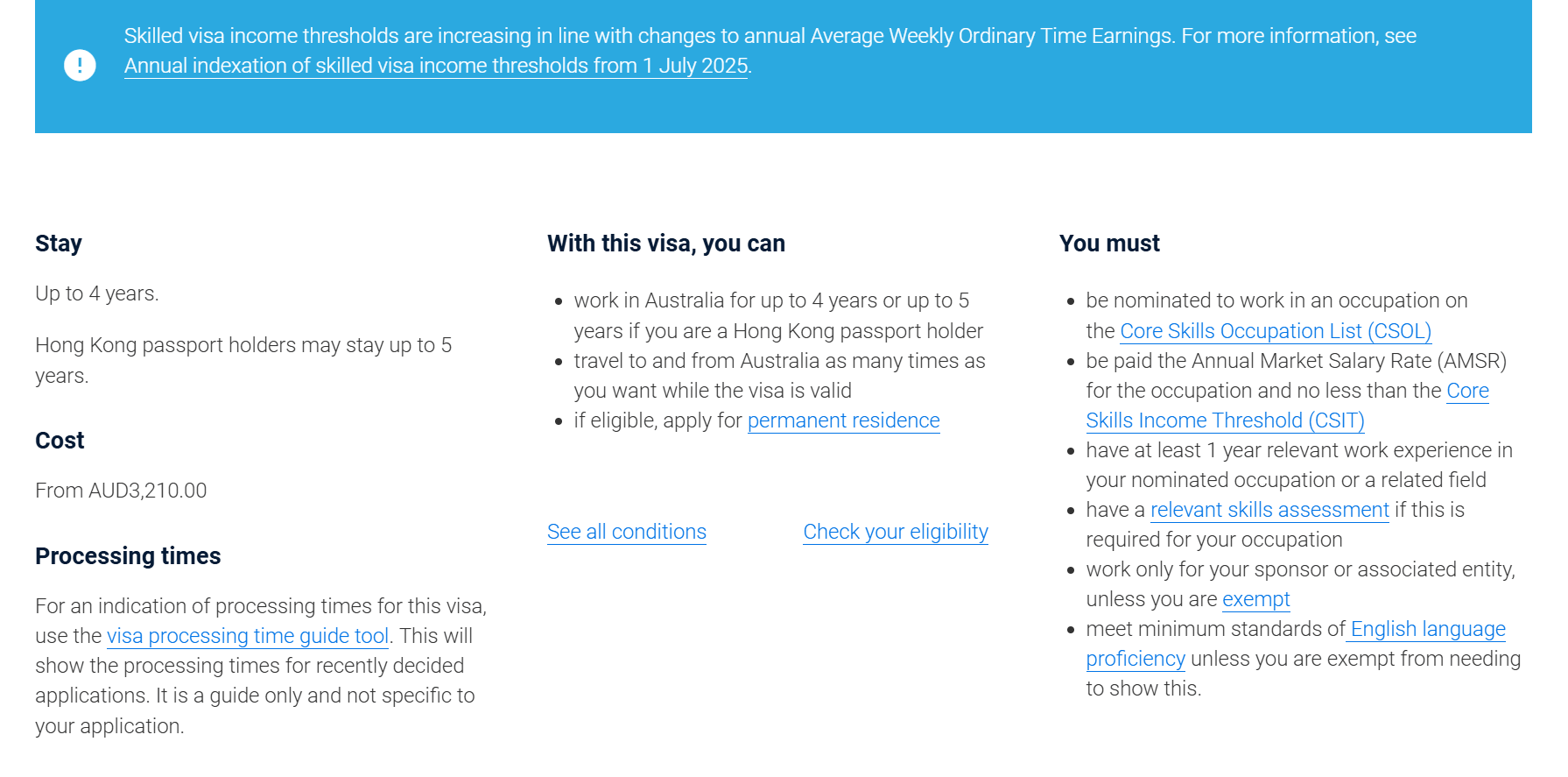
For the Core Skills Stream, the occupation will generally need to be included on the Core Skills Occupation List (CSOL). For the Labour Agreement Stream, the business must consider whether it already has, or can access, an appropriate Labour Agreement.
This explains why some applicants encounter the following situation:
The employer is willing to sponsor me, but the application still cannot proceed.
Willingness alone does not mean that the nomination requirements are satisfied.
3. LMT Is One of the Steps Employers Most Commonly Overlook
The Department of Home Affairs makes it clear that before lodging certain nominations, employers may need to complete Labour Market Testing (LMT).
In simple terms, this means advertising the position in the Australian labour market and demonstrating that the recruitment process has been properly conducted.
Applications commonly run into problems because:
- job advertisements were not published for long enough
- the advertisement did not contain sufficient information about the genuine position
- the advertising channels did not meet the requirements
- screenshots, publication dates or recruitment records were not retained
- the business simply says it “could not find anyone” without supporting evidence
This is particularly common among small and medium-sized businesses.
A business owner may genuinely have difficulty recruiting suitable workers, but a visa application requires evidence that can be submitted and verified.
This is why some employers initially believe sponsorship will be straightforward, only to discover later that the required evidence trail is incomplete.
4. Salary Is More Than Simply Agreeing on a Number
Another common misunderstanding is:
If the employer is willing to pay me, the position can be nominated.
In reality, a 482 / SID nomination must also meet the relevant salary requirements.
The Department generally requires the nominated salary to reflect the appropriate market salary and satisfy the relevant income threshold. Different streams may have different thresholds, and these amounts can change over time.
Common employer-side issues include:
- the offered salary is below the applicable requirement
- only a total remuneration package is stated, with no clear breakdown
- the employer cannot provide evidence supporting the market salary
- the proposed salary does not appear consistent with the responsibilities of the role
So after receiving an offer, the first reaction should not simply be:
Great, now I can apply.
The more useful question is whether the salary actually meets the 482 / SID nomination salary requirements.

5. Why Do Some Strong Applicants Still Get Stuck?
Because a subclass 482 visa is not assessed solely on the applicant.
It is an application involving three key elements:
the applicant + the employer + the nominated position
Even if the applicant satisfies the English, experience and qualification requirements, employer-side problems can still prevent the application from progressing smoothly.
Common examples include:
- the business does not understand the sponsorship process
- the position description is too vague
- the job duties do not align with the applicant’s background
- recruitment evidence is incomplete
- salary evidence is insufficient
- business compliance or operating documents are not properly prepared
This is why some applicants ask:
“I meet all the requirements, so why can’t I apply?”
In many cases, the problem is not the applicant. It is the employer side of the application.
The Department’s employer sponsorship guidance similarly treats nomination, salary, LMT and occupation requirements as key parts of the process.
6. What Should Applicants in Sydney and Melbourne Check First?
If you are currently looking for work in Sydney or Melbourne, or have already received an offer, the four things worth checking first are:
- Can this position actually be sponsored under the 482 / SID visa?
- Is the occupation included on the relevant list?
- Does the salary meet the applicable requirements?
- Is the employer willing and able to provide the required nomination documents?
There may be many employment opportunities in Sydney and Melbourne, but having a job opportunity does not automatically mean the role is suitable for sponsorship.
When an offer cannot ultimately be used for a 482 visa, the problem often comes down to employer-side details rather than the applicant’s own qualifications.
If the situation is more complicated, for example:
- the occupation classification is unclear
- the employer has never sponsored a worker before
- the salary is close to the required threshold
- the business does not know how to complete LMT
- you also want to assess whether the visa could later lead to subclass 186 permanent residency
then it is generally more useful to assess the position, salary, occupation and employer circumstances together rather than guessing based on the visa name alone.
7. What Happens If the Employer-Side Documents Are Not Ready?
There are usually three direct consequences.
1) Application Delays
Incomplete documents often mean requests for further information, repeated clarification and internal back-and-forth between the applicant and employer, which can significantly slow down the process.
2) Increased Application Risk
If the position, salary, recruitment records and company documents are inconsistent with one another, the risk of problems during assessment can increase.
3) Wasted Time for the Applicant
Some applicants begin preparing English tests, health examinations, police clearances or even resignation arrangements before discovering that the employer is unable to complete the sponsorship process.
In many cases, this can create a much greater loss of time and effort.
8. A Practical Tip for Employers and Applicants
If you are the applicant, do not simply ask your employer:
“Can you sponsor me?”
More useful questions include:
- Have you sponsored overseas workers before?
- Which occupation will this position be nominated under?
- How will the salary be determined?
- Has LMT already been completed?
- Who in the company will provide documents if further information is requested?
If you are the employer, the most efficient approach is also not to immediately start preparing a long document checklist.
First confirm the key issues:
- position
- occupation
- salary
- recruitment records
- the business’s ability to cooperate with the process
If these points are assessed correctly at the beginning, the later stages are usually much easier to manage.
Summary
When applying for a subclass 482 visa, the employer needs to do far more than simply provide a job opportunity.
From occupation eligibility, position nomination and LMT to salary requirements, business documents and later requests for information, every stage can affect whether the application proceeds smoothly.
This is why many applicants encounter difficulties at the employer stage. The issue is not necessarily that the visa rules are unusually complicated, but that the employer-side preparation is often more detailed and easier to overlook than expected.
If you are currently assessing a job offer in Sydney or Melbourne, or are unsure whether your employer meets the relevant requirements, it is worth reviewing both the position and the business circumstances before deciding how to proceed.
Australia Visa Link can assist applicants with occupation matching, employer eligibility, salary requirements, LMT preparation and longer-term Employer Nomination Scheme 186(186签证) planning. If you are unsure whether your current offer may be suitable for a 482 / SID visa, or whether it may later provide a pathway to subclass 186 permanent residency, you are welcome to contact Australia Visa Link for an assessment.